When COVID hit, everything stopped.
My clinic closed overnight. My work—my purpose—was labeled “non-essential.”
Because of a government misclassification, I couldn’t see clients for thirteen months.
Thirteen months of waiting, of uncertainty, of sitting with my own restless energy.
And then my marriage ended.
It felt like I’d been hit twice—once by the world, and once by life itself.
I remember waking up most mornings with this mix of panic and anger in my chest. I’d go through the motions—emails, bills, groceries—but underneath it all, I was boiling. My nervous system was fried. I wasn’t grounded. I wasn’t myself.
Looking back now, I can see it clearly: I was triggered.
My body was in constant survival mode, and I didn’t even know it.
During that time, even though people were trying to help me, I couldn’t let them in.
Friends reached out, my family checked in—but I couldn’t trust anyone.
I had judged the circumstances, judged others, and eventually turned all that judgment inward.
I told myself stories about who had failed me, who didn’t care enough, who didn’t understand.
And before long, I stopped trusting myself too.
That’s what being triggered does—it pulls you into survival, and when you’re in survival, trust becomes impossible.
I drank almost every day back then. It wasn’t to party or escape reality—it was to quiet the noise. To numb the discomfort of being lost, angry, and uncertain. For a while, it worked. It took the edge off. But it also dulled everything else—the clarity, the connection, the chance to heal.
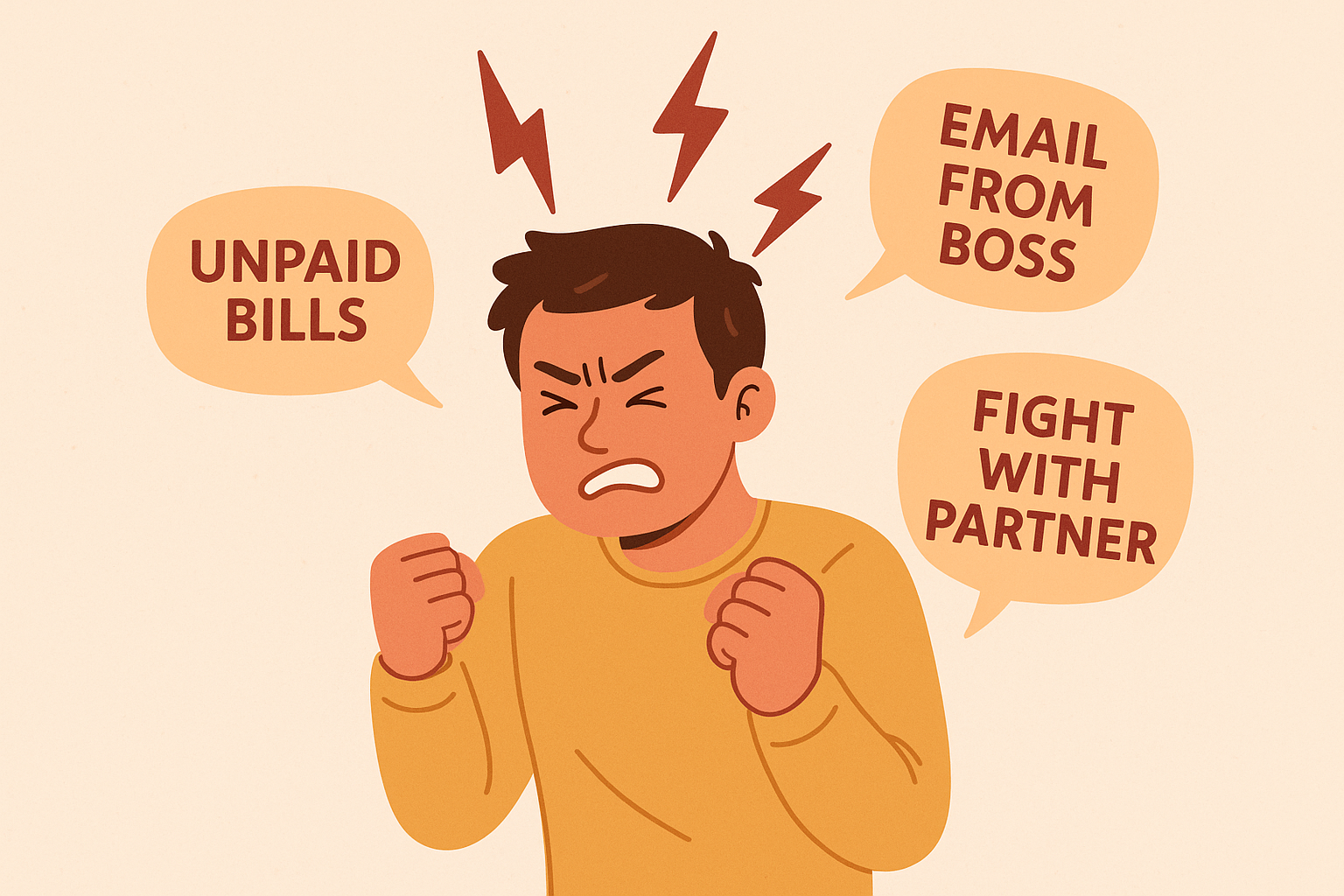
A “trigger” isn’t just an emotional flare-up—it’s a full-body alarm.
The moment something feels unsafe (even emotionally unsafe), your body flips a switch.
Your thinking brain steps aside, and your survival brain—your amygdala—takes over.
Cortisol floods in. Adrenaline spikes. Your body starts scanning for danger.
But here’s the thing: in the modern world, the danger usually isn’t physical anymore.
It’s a pile of unread emails.
It’s your boss’s tone in a meeting.
It’s a deadline that’s already slipped by.
It’s your partner saying, “We need to talk.”
The danger lives in our emotions and in our minds now.
It’s not a bear in the woods—it’s the fear of rejection, the fear of not being enough, or of losing something that matters.
And yet, the body still reacts the same way—heart racing, jaw clenching, breath tightening—because it doesn’t know the difference between real danger and emotional threat.
For me, my go-to survival responses are freeze and fawn.
When life feels too big, I shut down. I go quiet.
And then, I try to make everything okay for everyone else—even when I’m falling apart inside.
You might fight.
You might run.
You might numb out.
You might people-please.
Everyone’s different. But it’s all the same system trying to keep us safe.
If I could go back to that version of me in 2020, I wouldn’t tell him to “calm down.”
I’d tell him to notice.
Notice the tightening in the chest.
Notice the heat in the face, the short breath, the rush to defend or explain.
Notice the impulse to react before you’ve even thought it through.
Because that’s the moment.
That small, invisible gap between the trigger and the reaction—that’s where the healing starts.
That’s where you catch yourself.
That’s where you choose to breathe instead of explode.
That’s where you remember: you’re safe, even if it doesn’t feel like it.
Here’s the thing—the trigger itself isn’t bad.
It’s actually an important alert from your nervous system saying, “Hey, something feels off.”
It’s trying to help you, to get your attention.
The problem isn’t the trigger—it’s what happens after.
It’s when we get swept into the story our mind creates to explain that feeling.
Once we attach to the story, we fall into the loop: the emotions from the amygdala spill into the body, the breath tightens, the heart races, and suddenly the body is living the story as if it were real.
That’s how we end up fighting ghosts from the past instead of responding to what’s right in front of us.
Here’s what I’ve learned to look for in myself and in others:
If you catch even one of these, pause.
That’s awareness—and awareness is everything.
It brings your thinking brain back online.
These small steps build something powerful—trust.
The kind of trust where your body starts to believe you when you say, “We’re safe.”
Before we can regulate, we have to understand what our system does to protect us.
Most of us already know our patterns—maybe you fight, maybe you run, maybe you shut down or try to please everyone around you.
None of these are wrong; they’re all ways your nervous system learned to keep you safe, often way back in childhood.
The goal isn’t to erase these responses, but to notice them and remember: this is my body trying to protect me.
When you can see the pattern, you stop being controlled by it.
Once you’ve recognized it, the next step is to come back into your body. That’s where grounding practices help. Breathing deeply, feeling your feet, or using your senses to orient to the present moment all send a clear message to your nervous system: we’re safe now.
Here are a few ways to begin:
These simple acts remind your body that it no longer needs to fight, flee, freeze, or fawn. They bring you back to the here and now—back to the only place where healing can happen.
Over the last year, I’ve brought this nervous-system awareness directly into my osteopathic treatments. Every session now starts with helping your body remember what safety feels like. Through gentle, hands-on techniques and voice-guided awareness, I walk clients through the same process I teach here—recognizing what’s happening in their system, regulating through the breath and body, and slowly rewiring the patterns that keep them stuck.
This isn’t a separate part of treatment—it’s woven throughout the session. Sometimes it’s through conversation, sometimes it’s simply helping you notice what’s happening inside your body, or guiding you to embody emotions that were once too hard to feel. It’s subtle work, but it’s powerful. And the feedback has been incredible—people leave not just looser, but calmer, clearer, and more connected to themselves.
Being triggered isn’t the problem.
Staying unaware is.
The work isn’t about never getting triggered again—it’s about noticing sooner, recovering faster, and staying grounded longer each time.
When you can see the storm coming and choose not to step into it, that’s when you know you’re healing.
With gratitude,
Kevin
If there’s something you’ve always wanted to ask about your health, your nervous system, or what’s happening in your body—send it my way. I’d love to include your questions (anonymously, of course) in future posts.
You can email me directly at kevin.janna@gmail.com or drop a note through the new site: christiehealth.ca
Thanks again for being part of this journey. Here’s to presence, healing, and the practice of simply showing up.